
How the Brain Creates the Feeling of Time — and Why We Sometimes Lose It
We live in time as fish live in water. It surrounds us so completely that most of the time we forget it’s even there—until it bends, stretches, or slips through our fingers. One moment an afternoon feels endless; the next it disappears in what seems like seconds. Neuroscientists have long been fascinated by how the human brain constructs this elastic experience of time, because unlike other senses, we have no specific receptor for it. There are cells for detecting light, sound, touch, and smell, but no “time neurons” feeding us a direct stream of seconds and minutes. Instead, our sense of time is a complex product of memory, attention, emotion, and physiology, an intricate symphony played across the brain’s networks. Research suggests that time perception arises from the coordinated activity of multiple regions, including the basal ganglia, the cerebellum, and especially the prefrontal cortex. These areas integrate sensory information and monitor the body’s internal rhythms—heartbeats, breathing, even oscillations in neural activity—to create what feels like a steady flow. Yet the brain’s internal clock is anything but steady. When we are deeply focused or emotionally charged, this internal timing system can speed up or slow down, distorting the sense of duration. Think of how seconds stretch during an accident or how hours vanish when we’re absorbed in a creative task. Both experiences are driven by how the brain allocates attention and encodes events in memory. Emotion, in particular, warps time dramatically. When we’re anxious or afraid, the amygdala fires intensely, injecting a flood of arousal hormones that increase the rate at which sensory information is processed. More data reaches consciousness per moment, making time seem to slow. The opposite happens in states of calm enjoyment: with fewer salient changes to process, minutes blur together, creating a sense of effortless flow. This is why the same five-minute wait can feel unbearably long when you’re running late, yet vanish when you’re caught in a conversation you love. Memory also plays an invisible yet decisive role. Our brains estimate how much time has passed partly by counting the number of changes we remember. A day filled with novelty—new faces, new tastes, unexpected events—produces a dense ribbon of memories, which makes it seem long in retrospect. Familiar days, by contrast, collapse in memory; they leave little trace to mark their passage. This is why childhood summers seem endless while adult weeks disappear—the richness of experiences differs. When time “disappears” altogether, as in the state psychologists call flow, the brain temporarily reduces its awareness of self and clock time, favoring pure attention to the present act. In those moments, the machinery that keeps track of duration pauses, and what remains is only the experience itself, unmeasured and complete. Understanding how the brain achieves this balance—between precision and surrender—illuminates not just how we experience time, but how we inhabit our own lives.
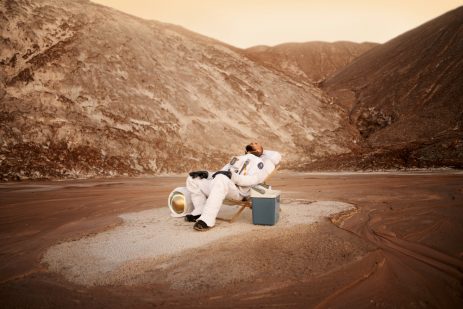
Space Tourism: How Close Are We to Traveling Beyond Earth?
Once considered the stuff of science fiction, space tourism is inching ever closer to becoming a tangible reality. The notion that everyday travelers—beyond astronauts trained for years—might soon experience Earth from orbit or even journey to the Moon is no longer a distant fantasy. The rapid convergence of private investment, reusable rocket technology, and public curiosity has propelled the commercial space industry into a pivotal phase. Companies that only a decade ago were testing prototypes are now successfully launching crewed missions, signaling that paying customers could soon join the passenger lists. Yet, for all the enthusiasm, the dream of boarding a rocket for a quick getaway to the stars remains an expensive, technically challenging, and highly selective endeavor. Several private players are shaping this new age of exploration. SpaceX, led by Elon Musk, continues to dominate headlines with its ambitious plans to transport civilians to orbit and beyond. Blue Origin, founded by Jeff Bezos, has already flown its suborbital New Shepard vehicle with passengers, providing a few minutes of weightlessness and extraordinary views of Earth. Meanwhile, Virgin Galactic’s spaceplanes offer a different approach—launching from traditional runways, gliding briefly into space, then returning safely to Earth. These companies collectively represent the vanguard of a movement that may soon redefine luxury travel. But despite headline-grabbing launches, only a handful of people have actually experienced space firsthand, and each of those few paid sums that rival the cost of a private jet. Behind the glamour of space tourism lies a web of logistical and ethical questions. How safe are these journeys? Can the risks ever be reduced to the level of commercial aviation? And beyond safety, what of environmental impact? Rocket launches release significant emissions, and as the frequency of flights increases, so too will concerns about sustainability. There are also social dimensions to consider—will space tourism merely reinforce global inequality, giving the ultrarich another frontier to conquer while the rest of humanity watches from below? Or could it, in time, become more accessible, fostering a shared interest in our planet and its preservation? For now, the industry resembles the early days of air travel: exhilarating but exclusive. Just as flying once seemed impossible for ordinary people, so too might space journeys eventually become routine. Emerging smaller firms and new technologies are already exploring ways to drive down costs, perhaps through hybrid vehicles, orbital hotels, or more efficient propulsion systems. While mass space tourism may still be years—if not decades—away, each successful mission brings us closer to an era in which crossing the threshold of Earth’s atmosphere is not a privilege for a few, but an experience open to many. Whether we are ready to embrace that future remains to be seen, but one thing is certain: humanity’s curiosity about what lies beyond our blue planet has never been stronger, and the path from dream to departure may be shorter than we think.

Why We Overestimate Genius and Underestimate Persistence
In popular culture, the story of success often begins with a flash of brilliance. We celebrate the prodigy, the gifted, the one who saw what no one else could. It’s a comforting myth because it explains achievement as something almost magical—something that belongs to a chosen few. The image of the genius inventor sketching in solitude, or the young artist “born” with talent, appeals to our love of simplicity. Yet, in glorifying genius, we quietly distort the truth about how success actually happens. Behind almost every so-called prodigy are years of deliberate effort, an enormous tolerance for failure, and a persistence that borders on obsession. The myth of genius gives us a beautiful story, but it also gives us an excuse. It lets us off the hook from trying as hard as those we admire. The problem with overestimating genius is not that intelligence or creativity don’t matter—they clearly do—but that we tend to treat them as the whole story. We underestimate the grind, the repetition, the daily commitment that transforms potential into achievement. Science has long shown that what we perceive as “innate” skill is often the result of sustained practice over time. Psychologists studying expertise in music, sports, and science have found something remarkably consistent: those who rise to the top are rarely just the most talented at the start, but the most persistent along the way. Even ideas that seem to appear “out of nowhere” often originate from years of curiosity and accumulated experience. In other words, what looks like genius in the end is often persistence in disguise. Yet we resist this idea because persistence is unglamorous. It doesn’t offer the instant gratification that genius seems to promise. A story about late nights, slow progress, and quiet discipline lacks the cinematic appeal of sudden inspiration. But this bias toward brilliance affects more than just storytelling—it influences how we raise children, how we evaluate talent, and how we measure our own worth. When we assume that ability is fixed, we become hesitant to stretch ourselves, fearful that effort will only expose our limits. When we embrace persistence instead, failure becomes data, not defeat. Perhaps the most important shift we can make is to stop treating persistence as a consolation prize for the untalented. It is, in truth, the foundation of mastery, the invisible force that sustains learning long after enthusiasm fades. Genius may ignite the spark, but persistence keeps the light alive. The sooner we recognize that, the more accessible excellence becomes—not only for the gifted few, but for anyone willing to keep going when it’s hardest to do so.

The Art of Serendipity: How Mistakes Become a Source of Innovation in Creativity
In the world of creativity, serendipity has long been the hidden thread connecting failure to innovation. While most of us are taught to fear mistakes, history—and the creative process itself—suggests a different truth: some of the most transformative ideas have emerged not in moments of perfection, but in unexpected turns of error. The art of serendipity is not about blind luck; it is about the ability to recognize potential in chaos, to see opportunity in what first appears to be failure. In this light, creativity becomes less about control and more about openness, a willingness to embrace the unpredictable and listen to what mistakes are trying to teach us. Many breakthroughs that shape our culture and technology were born from such fortunate accidents. From the discovery of penicillin to the invention of the microwave oven, countless innovations began with someone noticing something they did not intend to find. The same applies to the arts: a painter’s stray brushstroke might redefine a composition, a writer’s misphrased sentence may reveal a deeper truth, and a designer’s manufacturing flaw can inspire a new aesthetic. What links these moments together is curiosity—the ability to ask, “What if?” rather than dismissing the result as useless. Serendipity rewards those who remain receptive, those who allow intuition to dance with imperfection. However, cultivating serendipity is not a passive act. It requires an environment where mistakes are not punished into silence but are explored for possibility. In highly structured systems that value predictability over exploration, this art can suffocate. Innovation often happens at the edges where disciplines meet, where rules blur, and where outcomes cannot be easily predicted. By intentionally creating space for experimentation, discomfort, and even error, individuals and organizations unlock deeper layers of creativity that strict planning alone could never reach. This is why some of the most dynamic creative cultures—whether in science, design, or art—encourage iteration, improvisation, and reflection rather than perfection. The essence of serendipitous creativity lies in reframing our relationship with the unknown. Instead of treating uncertainty as an obstacle, it becomes a collaborator. When we loosen our grip on certainty, we start to notice the subtle cues that lead to discovery—the small surprises that whisper of new ideas forming. Innovation is no longer the product of a flawless plan, but the result of curiosity meeting imperfection. Serendipity, then, is less an accident and more an art: a practice of awareness, humility, and imagination that transforms mistakes into moments of insight. Those who master it do not simply create by design; they create by discovery, finding wonder in the unexpected paths that unfold when perfection takes a brief and necessary step aside.

How Climate Affects the Economy: Unexpected Links Between Weather and Markets
It’s easy to think of climate as something that belongs to the realm of environmental science while the economy sits comfortably in the domain of numbers, graphs, and financial systems. Yet, the two are more intertwined than most people realize. Small changes in temperature, shifts in rainfall patterns, or the frequency of extreme weather events can ripple through supply chains, influence consumer behavior, and even alter national growth trajectories. Climate is not merely a backdrop to human activity—it is a dynamic force shaping the rhythm of markets, the cost of living, and the stability of entire regions. Weather volatility, for example, doesn’t only affect farm yields; it can send price shocks across global markets. A drought in one continent can drive up food prices elsewhere, tightening household budgets and straining governments that subsidize basics like grain or fuel. Insurance companies, often silent witnesses to environmental risk, are becoming key players in this equation. Their assessments of “climate exposure” can determine whether a real estate project is financially feasible or a company can secure coverage at a sustainable rate. Behind every policy adjustment and every risk premium lies an evaluation of the climate’s economic threat. But the effects are not solely negative. Warm winters can reduce heating costs, encouraging consumer spending in other sectors. Longer agricultural seasons might allow certain regions to cultivate new crops previously unknown to their climate. Renewable energy industries, driven by both necessity and innovation, are creating jobs and attracting investment to areas once dependent on extractive economies. These developments illustrate how shifts in weather and climate patterns open opportunities as much as they impose costs. Still, those opportunities are unevenly distributed—developed nations often adapt faster and benefit sooner, while poorer countries confront the harsher side of the adjustment curve. Financial markets are increasingly factoring climate risk into their models, not as distant speculation but as immediate practical math. Investors now track climate data alongside traditional indicators like interest rates and GDP trends. When floods close ports or heat waves drive up electricity consumption, those fluctuations appear in quarterly earnings and stock valuations. The rise of “green finance” underscores this transformation; sustainable investment funds are not simply moral moves toward environmental responsibility—they have become prudent hedges against climate unpredictability. Ultimately, understanding how climate affects the economy requires stepping beyond the usual cause-and-effect thinking. It’s about recognizing feedback loops: how economic decisions influence the environment, which in turn reshapes economic conditions. Policymakers, corporate leaders, and consumers all play roles in this cycle, knowingly or not. As the world experiences more climatic extremes, markets will need to evolve from reactive adjustment to proactive resilience. The link between weather and wealth is not an abstract concept for the future—it is the defining intersection of our present.
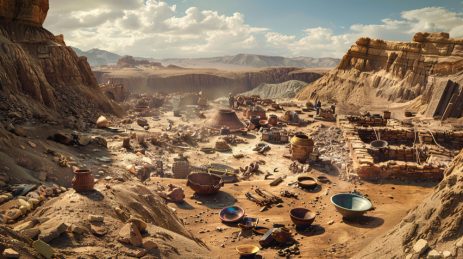
Lost Cities of Ancient Civilizations: What Archaeologists Have Discovered in the 21st Century
In the first decades of the twenty‑first century, archaeologists have been rewriting the very notion of what it means for a city to be “lost.” Distant jungles, arid deserts, and ocean floors have all surrendered secrets that remained hidden for thousands of years, transforming long‑held myths into verifiable chapters of human history. As technology has advanced—through precision satellite imaging, ground‑penetrating radar, and lidar scanning that can peel back forest canopies without disturbing a single leaf—the map of the ancient world has expanded almost monthly. Entire civilizations, thought to have vanished without a trace, are reemerging with a clarity that surprises even the most seasoned researchers. Among the most extraordinary revelations is the rediscovery of vast urban networks once dismissed as folklore. In Central America, new lidar surveys have exposed sprawling Maya settlements interconnected by raised causeways and sophisticated irrigation systems. These findings challenge earlier views of the Maya as fragmented city‑states and now present them as a unified civilization with complex regional planning. Meanwhile, in Southeast Asia, beneath the Cambodian rainforest, archaeologists have traced the full breadth of the Khmer Empire’s capital beyond the majestic temples of Angkor Wat. Subtle contours in the earth reveal residential quarters, industrial zones, and ingenious hydrological designs that once supported hundreds of thousands of inhabitants, pointing to a society of remarkable engineering prowess and urban foresight. Further west, in the sands of Arabia and North Africa, remote‑sensing technology has unearthed the routes and remnants of ancient trade hubs that connected the Mediterranean with sub‑Saharan and Indian Ocean worlds. These routes, long buried by dunes, have shed light on how gold, spices, and ideas moved across continents, emphasizing that globalization is far older than the modern era. Even the ocean has given up its share of mysteries: sunken metropolises, possibly the victims of earthquakes or gradual sea‑level rise, illustrate how vulnerable early coastal cultures were to environmental shifts. Each discovery deepens the realization that climate pressures have shaped civilization for millennia. Yet the fascination with lost cities goes beyond their physical rediscovery. It extends to what these findings reveal about human adaptability, ambition, and ingenuity. The revelations of the twenty‑first century suggest that societies capable of monumental architecture, astronomical precision, and intricate administration have appeared in more places—and under more conditions—than once imagined. They also remind us that disappearance does not always mean failure; sometimes it is a testament to transformation. As we continue to peer beneath forests, deserts, and seas, the boundary between legend and history is fading, replaced by a dynamic portrait of humanity’s shared and still‑emerging past.
The Invisible World Within Us: What the Microbiome Reveals About Our Health
Inside every human being exists an extraordinary and largely unseen ecosystem, a universe composed of trillions of microorganisms that live in, on, and around us. These microscopic companions—bacteria, fungi, viruses, and archaea—form what scientists call the microbiome. Once dismissed as mere passengers, they are now recognized as vital partners in our survival. The more we learn about them, the clearer it becomes that our health and even aspects of our personality and mood are deeply influenced by their activities. The microbiome is not simply a biological curiosity; it is a key player in shaping who we are. Research over the past two decades has completely shifted how we understand the human body. Each of us carries roughly as many microbial cells as human ones, and they live mostly in our gut, though they also cover our skin, mouth, and many other places. The gut microbiome is often described as a bustling city of microorganisms, each with its own role: some help us digest food, others produce essential vitamins, and some communicate with our immune system, maintaining a delicate balance between defense and tolerance. When this balance falters—because of antibiotics, poor diet, stress, or illness—our microbial allies can become adversaries, contributing to a range of health problems from obesity to autoimmune disorders. Scientists have found that the microbiome operates like an invisible organ, performing functions that no human cell can manage alone. Consider the process of digestion: complex plant fibers that escape our enzymes are handed over to microbes, which ferment them into short-chain fatty acids that strengthen the gut lining and reduce inflammation. Similarly, the microbiome trains our immune system, teaching it to distinguish friend from foe. Emerging evidence even suggests that certain bacteria influence the production of neurotransmitters like serotonin and dopamine, linking gut health directly to mental well-being. The once fanciful idea of a “gut-brain connection” is now supported by a growing body of clinical data. At the same time, scientists caution against oversimplifying the story. No two microbiomes are identical, and what benefits one person may harm another. The microbial landscape is shaped by genetics, geography, diet, and lifestyle—meaning that there is no universal formula for a “perfect” microbiome. Still, understanding its dynamics offers enormous promise. Researchers are exploring therapies that deliberately alter microbial communities, from targeted probiotics to fecal microbiota transplants. These approaches could transform how we treat chronic diseases, not by attacking symptoms, but by restoring ecological balance within the body. Ultimately, the microbiome teaches us that human health is not an isolated phenomenon but part of a vast interplay between species. To care for ourselves means tending to this hidden world that sustains us. In the quiet cooperation between human cells and microbes, we may discover not only the roots of disease and wellness but also a profound reminder of our connection to life itself.
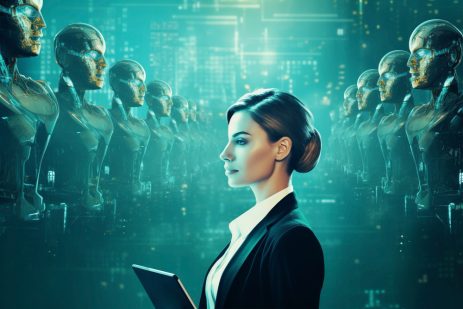
How Artificial Intelligence Is Changing Jobs Once Thought Impossible to Automate
For decades, people have comforted themselves with the idea that certain jobs would forever remain the exclusive domain of human skill, judgment, and creativity. Artists, teachers, doctors, lawyers, and even writers—these were once thought to be insulated from the reach of automation. Machines, after all, were tools built to perform rigid, repetitive tasks; human intelligence was something else entirely, complex and intuitive in ways that computers could never replicate. But over the past few years, the rapid evolution of artificial intelligence has blurred that line. What was once the stuff of science fiction has become an everyday reality: AI not only assists workers in a variety of industries but, in some cases, rivals or even surpasses them. Consider medicine, one of the fields most resistant to automation. Diagnostic tools powered by AI now scan radiology images with breathtaking precision, identifying early signs of disease that even seasoned specialists might overlook. These systems don’t replace doctors but they do reshape their role—freeing them from the painstaking work of data analysis and enabling more time for patient engagement and complex decision-making. Similarly, in the legal world, algorithms are combing through millions of documents in a fraction of the time it would take a human paralegal. Instead of eliminating the need for lawyers, AI is shifting their focus toward strategy, interpretation, and ethics—tasks still grounded in human nuance. Creative industries, too, are undergoing a profound transformation. Music, design, and even storytelling are being influenced by machine learning tools that understand patterns, aesthetics, and tone. While some critics fear a loss of authenticity, others see opportunity: artists collaborating with algorithms to push the boundaries of imagination. The very act of creation becomes a partnership between human impulse and machine precision. And it doesn’t stop there. In education, AI tutors personalize learning experiences, adapting to each student’s pace and style. In customer service, chatbots handle routine inquiries, allowing human agents to focus on empathy-driven interactions. Everywhere one looks, the emerging pattern is not total replacement but redefinition. Still, the progress is not without its challenges. Issues of bias, transparency, and accountability persist. Algorithms, though seemingly objective, reflect the data they are trained on—data often filled with human imperfections. The future of work will depend, in part, on how society addresses these vulnerabilities. What is clear, however, is that the frontier between human and machine has shifted permanently. The jobs once thought immune to automation are now being transformed, not because machines have learned to mimic us perfectly, but because AI has changed what it means to do the work in the first place.